

Layering Textures for a Warm Autumnal Interior
Why Texture Matters More Than Ever as the Nights Draw In
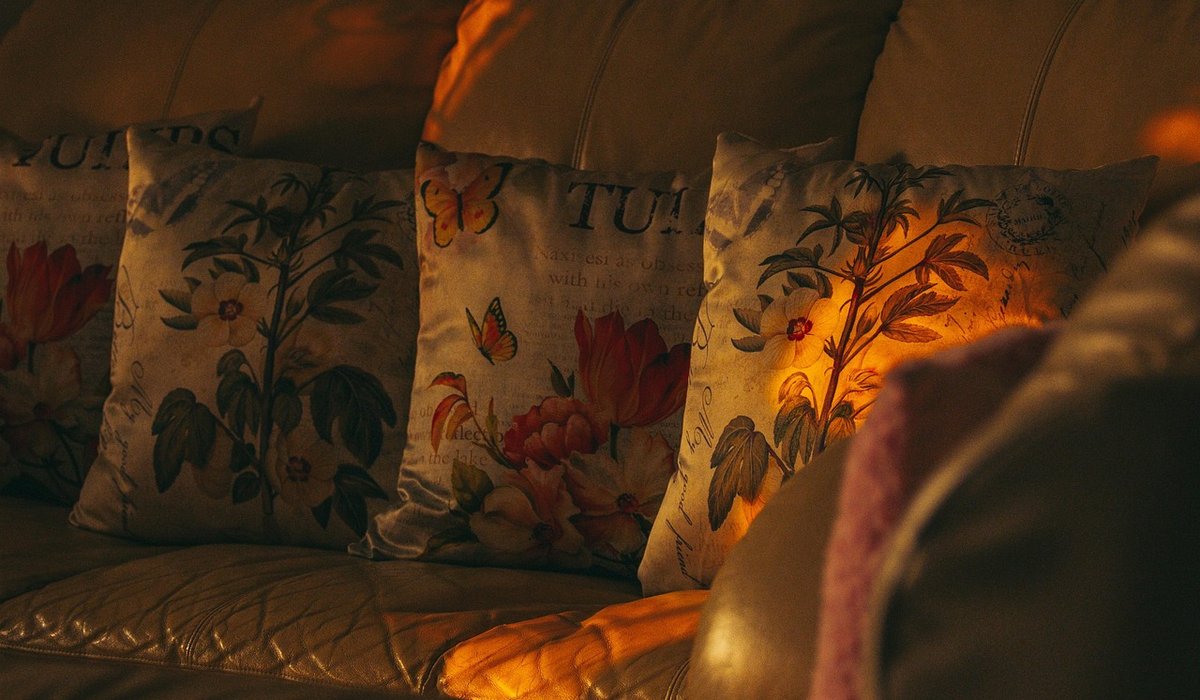
As the evenings close in and the heating clicks on for the first time since spring, most of us reach for the same instinctive fixes: a thicker duvet, a bigger mug, an earlier night. But the difference between a room that simply keeps you warm and one that genuinely feels like a retreat comes down to texture. Light and colour set the mood; texture is what your hands and eyes respond to when you sink into the sofa on a dark October evening. Layering wool, velvet and natural wood gives a room depth, stopping even a beautifully decorated space from looking flat once the bright summer light has gone.
The best part is that it is one of the cheapest and most forgiving changes you can make. You are not replastering walls or replacing the sofa. You are adding, overlapping and mixing — and if something does not work, you move a cushion to another chair and try again.
Start With Wool: The Foundation Layer
Wool is the workhorse of an autumnal interior, and it pays to choose it deliberately rather than grabbing whatever is nearest. Look for a throw of around 400–600gsm in lambswool, merino or a wool-rich blend; it will hold its shape through years of Sunday afternoons. A loose, thin acrylic blanket will pill and sag by January, which rather defeats the point.
Weight matters as much as fibre. A large throw (roughly 130cm x 180cm) draped over the back of a sofa reads as generous and inviting, while a smaller knee blanket folded across an armchair adds interest without swamping the frame. Think about weave, too — it is the easiest way to build variation without introducing more colour:
- Chunky rib or cable knit for a traditional, cottage feel
- Herringbone or tweed for something tailored and a little more refined
- Waffle or bouclé for a lighter, more contemporary layer
- Fair Isle or tartan used sparingly as the accent rather than the whole story
Layer two throws of different weights on the same sofa. It sounds frivolous; it looks considered.
Velvet Cushions: A Little Sheen Goes a Long Way
Where wool absorbs light, velvet throws it back. That contrast is exactly what makes a room feel rich rather than merely heavy. A couple of velvet cushions on a linen or wool sofa create small pools of sheen that catch lamplight and candlelight, giving the eye somewhere to rest as the room darkens.
Stick to a palette drawn from autumn itself — rust, ochre, deep teal, plum, moss — and anchor it with at least one neutral in oatmeal, charcoal or stone. Sizing does more for the finished look than most people expect: a 50cm square at each end of the sofa, a 45cm square in front, and a rectangular lumbar cushion tucked in front of both. Odd numbers of cushions arranged loosely almost always beat symmetrical rows.
Keep the mix to roughly two-thirds matte and one-third shine. Velvet against wool, bouclé or washed linen is the combination that works hardest.
Ground Everything With Wood and Natural Materials
Soft textiles need something solid to sit against, or a room tips into fussiness. Natural wood provides that anchor, and autumn is the season when warmer tones come into their own. Oak, ash and reclaimed pine sit comfortably with rust and ochre, while walnut and darker stained timber bring a quiet formality to a living room.
You do not need new furniture. A wooden tray on an upholstered ottoman, a bowl turned from an offcut, a side table in a matte finish rather than high-gloss lacquer — small interventions, large effect. Mixing in one or two rougher surfaces, such as a rattan basket for throws, a terracotta planter or a slate coaster, stops the scheme from feeling too smooth and polished.
- Vary the finish: pair oiled wood with matte ceramic and brushed metal
- Add one organic shape: a round tray or curved bowl against straight-lined furniture
- Keep metals warm: aged brass and bronze flatter autumn tones better than chrome
Light, Fire and the Finishing Touches
Texture only reads properly under the right light. Swap cool white bulbs for warm ones around 2700K, and use two or three low-level lamps rather than one overhead light. A dimmer on the main circuit costs very little and changes the room completely after dark.
Finally, think about scent and sound as part of the same layering exercise. A wool throw, a lit candle with notes of cedar or fig, and the soft clatter of a fire or a good playlist all reinforce what the fabrics are already saying.
A Simple Layering Formula to Follow
If you would rather not overthink it, work to a ratio. On any surface — sofa, bed, armchair — aim for one smooth texture, one chunky texture and one natural material. Sandwiched together, they give depth at every scale.
- Base: wool throw or sheepskin
- Mid: velvet or bouclé cushion
- Anchor: wood, rattan, stone or ceramic
- Accent: brass, amber glass or a single warm metallic
Build it over a few weekends rather than in one shopping trip, and let each layer earn its place. The most inviting autumn rooms are rarely the most expensive ones — they are simply the ones where someone has taken the trouble to make three or four textures talk to each other.


Cosy Interiors
-
Use removable wallpaper, freestanding shelves and clever lighting to personalise a small rented property without risking your deposit.

Home Comforts




-

Long established fact that a reader will be distracted
-

Long established fact that a reader will be distracted
-

Long established fact that a reader will be distracted




Small Spaces
Karla Gleichauf
12 May 2017 at 05:28 pm
On the other hand, we denounce with righteous indignation and dislike men who are so beguiled and demoralized by the charms of pleasure of the moment
M Shyamalan
12 May 2017 at 05:28 pm
On the other hand, we denounce with righteous indignation and dislike men who are so beguiled and demoralized by the charms of pleasure of the moment
Liz Montano
12 May 2017 at 05:28 pm
On the other hand, we denounce with righteous indignation and dislike men who are so beguiled and demoralized by the charms of pleasure of the moment